


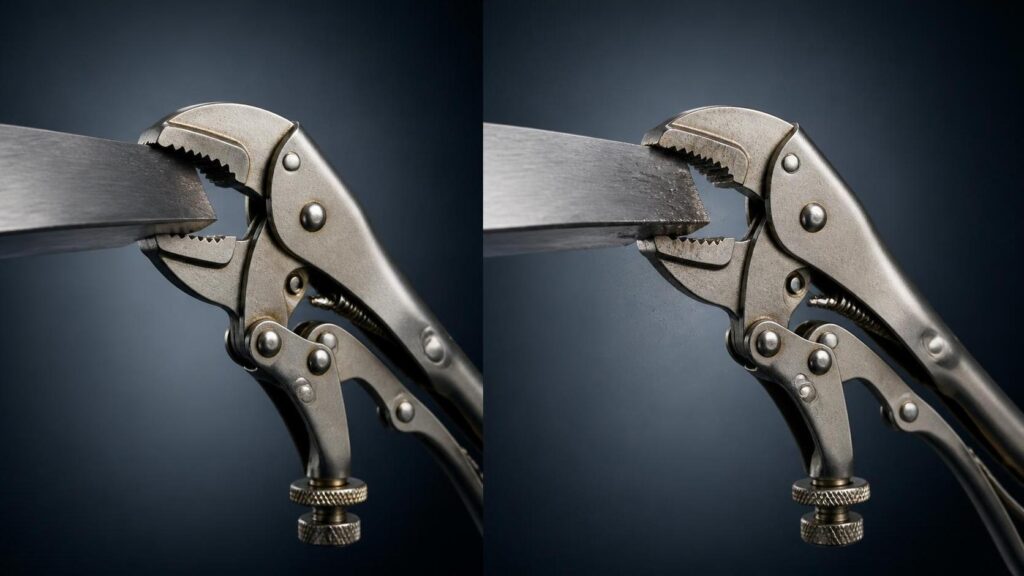

When locking pliers are used hard every day, many maintenance professionals start to notice slipping, reduced clamping force, or uneven jaw contact. Do locking pliers lose grip over time under repeated heavy use? The answer depends on wear, adjustment, material quality, and maintenance habits. Understanding these factors helps after-sales service teams diagnose tool performance issues faster and decide whether a simple fix or full replacement is the better option.
In real service environments, the short answer is yes: locking pliers can lose effective grip over time. But the loss is usually not sudden, and it is not always caused by one failed part. More often, grip performance declines gradually through a combination of jaw wear, pivot looseness, screw misadjustment, spring fatigue, and misuse beyond the tool’s intended clamping range.
Why grip declines under repeated heavy use
The jaw faces take the most punishment. If locking pliers are repeatedly clamped onto hardened fasteners, oily round stock, or damaged surfaces, the serrations begin to polish down. Once the teeth lose their bite, the tool may still lock, but it will hold less securely under torque. This is one of the most common reasons users describe as “the pliers won’t stay tight anymore,” even though the locking mechanism itself still works.
The pivot area is another wear point. Heavy daily use creates play in the rivet or joint, which changes jaw alignment. That matters because locking pliers rely on even contact and over-center force. If one side of the jaw contacts first, the clamp load becomes uneven. In practice, this shows up as twisting, slipping on flat material, or visible daylight between sections of the jaw when closed.
The adjustment screw also affects perceived grip loss. Many technicians assume a worn tool is the problem when the actual issue is that the screw has backed off slightly over repeated vibration or frequent readjustment between jobs. On the other hand, if the screw must be turned much farther than before to achieve the same hold, that usually points to internal wear rather than simple readjustment.
What service teams should check before replacing the tool
A quick bench inspection often tells you whether the tool is still serviceable. Close the jaws on a test piece with known geometry, such as flat steel of consistent thickness. Check four things: whether the jaws meet evenly, whether the locking action snaps over center cleanly, whether the release lever works without sticking, and whether the tool slips under moderate hand torque.
If the jaws are worn smooth, replacement is usually more practical than repair. If the jaws still have good tooth definition but the clamping force feels inconsistent, inspect the pivot for side play and confirm the adjustment screw threads are not damaged. Dirt, metal fines, and corrosion around the linkage can also reduce full locking travel. In those cases, cleaning and lubrication may restore acceptable performance.
When the problem is wear, and when it is misuse
Not every grip complaint indicates normal aging. Locking pliers are often used as a substitute for a pipe wrench, clamp, breaker aid, or even a holding fixture during welding and disassembly. Those uses are common in the field, but they accelerate deformation. Applying impact loads, extending handle length for extra leverage, or clamping oversized parts can permanently alter jaw geometry. Once the frame or linkage is slightly bent, no adjustment will fully recover original grip.
This matters for after-sales diagnosis because recurring complaints may point to application mismatch rather than poor tool quality alone. A premium tool generally holds its geometry longer, especially if the jaws and linkage are properly heat treated, but no locking pliers are immune to chronic overload.
Replacement decisions should be based on risk, not just age
For maintenance operations, the better question is not whether a tool is old, but whether degraded grip creates safety risk, rework, or service delay. A locking plier that occasionally slips during non-critical holding may remain usable for low-risk tasks. A tool used around seized fasteners, live maintenance zones, or surface-finish-sensitive parts should be removed earlier.
If slipping has become predictable, if jaw alignment is visibly off, or if users compensate by overtightening far beyond normal adjustment, replacement is usually the sound decision. In daily service work, lost time from a marginal hand tool often costs more than the tool itself.
So yes, locking pliers do lose grip over time under repeated heavy use. The key is to separate normal wear from avoidable misuse, and to judge the tool by holding reliability rather than by appearance alone. That approach leads to faster troubleshooting, fewer repeat complaints, and safer maintenance work overall.