


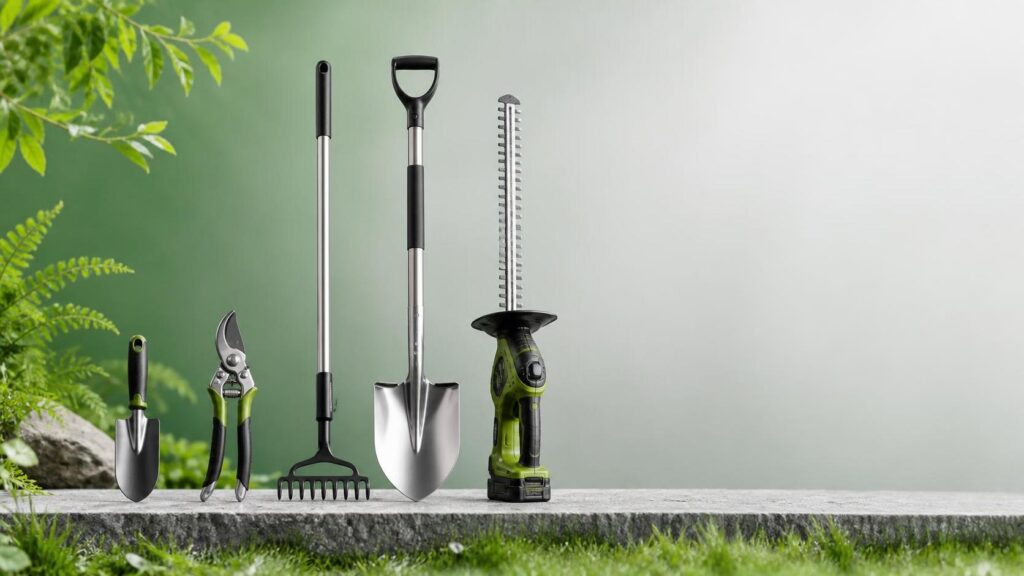

Choosing garden tools by brand or by whatever looks “heavy-duty” is usually the wrong starting point. For most homeowners, the better question is simpler: how much ground do you actually maintain, how often do you work on it, and where does the effort really go? A compact yard with a few beds has very different tool needs from a long suburban lot, a corner property with dense hedges, or a backyard that mixes lawn, trees, and hard-to-reach edges. Matching the tool to the scale of the yard is less about owning more equipment and more about avoiding wasted money, storage problems, and tools that are tiring to use.
For a small yard, versatility matters more than specialization. If your outdoor space is limited to a small lawn, a few pots, and one or two planting areas, you can usually cover most jobs with a hand trowel, pruners, a small rake, a digging fork or spade, and a lightweight hose or watering can. In this setting, oversized tools often create more friction than value. A full-length, heavy shovel may be useful, but a bulky hedge trimmer or large wheeled cultivator can end up taking more storage space than the job justifies. Small yards also tend to have tighter corners and more decorative planting, so control and comfort often matter more than raw power.
Mid-size yards are where many buyers make their first expensive mistake. This is the range where manual tools still work, but repetitive tasks start to consume real time. If you have a lawn large enough to mow regularly, several shrubs, and seasonal cleanup to manage, it makes sense to think in systems rather than single purchases. For example, a solid pair of bypass pruners, a lopper, a leaf rake, and one dependable digging tool will cover more real work than a collection of niche hand tools. If trimming and edging are frequent jobs, then a powered option may be justified, but only if the yard layout supports it. A cordless tool can be practical for moderate spaces; for larger areas, battery runtime and charging downtime become part of the decision, not a minor detail.
Large yards change the equation again. Once the property size turns maintenance into a routine workload, durability and labor savings matter much more than upfront price. This is where consumers should pay attention to shaft construction, handle material, blade steel, replacement-part availability, and whether the tool is built for repeated seasonal use. A larger yard often means more varied conditions too: compacted soil in one area, soft beds in another, mature branches, longer fence lines, and bigger leaf volume in autumn. In those cases, “multi-purpose” tools can start to feel like compromises. Specialized tools may cost more, but they often reduce fatigue and shorten the work enough to justify the spend over time.
Look at layout, not just square footage
Two yards of the same size can need completely different tool sets. A flat, open lawn is easier to maintain than a sloped property with retaining walls, narrow side access, raised beds, and dense planting. Before buying, it helps to break the yard into task zones: lawn care, soil work, pruning, cleanup, and watering. That quickly shows where the real demand sits. If most of your time goes into edging around borders and cutting back shrubs, a premium mower alone will not solve the problem. If digging is limited but seasonal cleanup is heavy, better rakes, tarps, and pruners may deliver more value than heavier ground tools.
Weight, ergonomics, and storage are practical buying factors
Consumers often underestimate how much tool weight affects use. A tool that is technically stronger but awkward in the hand may end up unused. For small to mid-size yards especially, grip shape, handle length, balance, and total carry weight deserve the same attention as material claims. This is also true for older users or anyone maintaining the yard alone. A lighter tool that gets used consistently is usually a better choice than a professional-grade option that is difficult to maneuver.
Storage should be treated as part of tool selection. Long-handled tools, battery chargers, hoses, and seasonal equipment can quickly overwhelm a small shed or garage wall. If storage is limited, collapsible, hanging, or multi-use tools may make more sense than buying separate items for every task.
What to check before you buy
- Frequency of use: Weekly maintenance justifies better build quality than occasional cleanup.
- Soil condition: Hard or rocky ground requires sturdier digging and cultivating tools.
- Plant type: Fine pruning for flowers and shrubs is different from cutting woody growth.
- Power source: Corded, cordless, and manual tools each fit different yard sizes and work patterns.
- Replacement parts: Blades, springs, batteries, and handles are worth checking on larger purchases.
- User strength and comfort: The best tool on paper is not the best tool if it causes strain.
One common assumption does not always hold: buying the most durable tool available is not automatically the smartest move. For a small yard with light seasonal use, mid-range tools can be perfectly adequate. On the other hand, going too cheap on cutting tools often leads to poor performance, faster wear, and more frustration than the initial savings are worth. The smarter approach is to spend where failure affects the job most: pruners, digging tools, and any powered equipment you expect to use often.
When choosing Garden Tools, the right set is usually the one that matches your yard’s real workload, not its idealized version. Start with the tasks you repeat every season, buy for the parts of the yard that consume the most time, and let the property’s size and layout decide when it is worth moving from basic essentials to more specialized equipment.